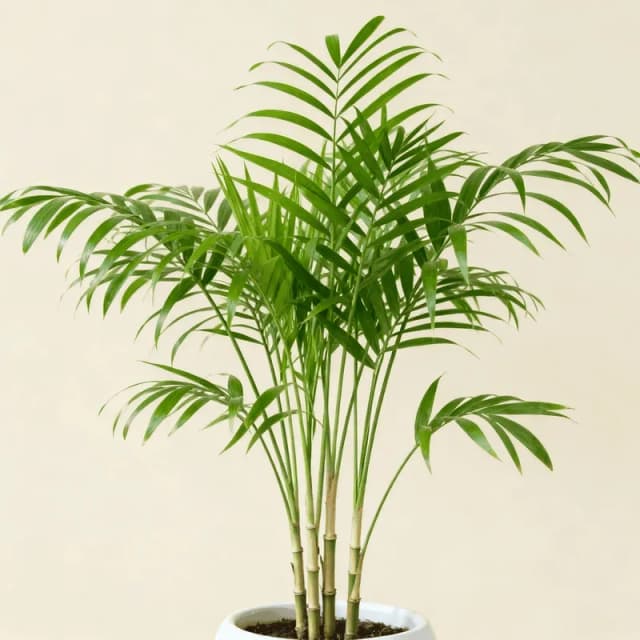
Areca Palm Care Guide
Dypsis lutescens
moderate careDypsis lutescens is thirstier than most houseplant palms and wants soil kept evenly moist, but it is also unusually sensitive to the salts and fluoride in ordinary tap water — brown, crispy frond tips are more often a water-quality problem than a sign of under-watering.
Quick care facts
- Watering
- Every 5–7 days, keeping soil evenly moist but never left standing in water
- Light
- Bright, indirect light; tolerates a little gentle morning sun
- Humidity
- 50%+; benefits from a humidifier or pebble tray
- Temperature
- 18–26°C (65–78°F); avoid cold drafts below 15°C (59°F)
- Soil
- Rich, well-draining potting mix that holds some moisture
How to water an Areca Palm
Areca palm is thirstier than most of its palm relatives and wants soil that stays evenly moist, so plan on watering every 5 to 7 days once the top couple of centimetres begin to dry, rather than waiting for a deep dry-down.
Brown, crispy tips creeping down the frond edges are this palm's most common complaint, and it's rarely thirst — it's mineral buildup in the mix from months of tap water. Switch to filtered, distilled, or rainwater, and flush the pot with a heavy watering every season or two to carry the salts out through the drainage holes.
Even though it drinks often, areca palm still needs a well-draining pot — water thoroughly, let it finish draining completely, and never let the base sit in a saucer of runoff, since standing water causes root rot just as readily as it does in less thirsty plants.
Watering an Areca Palm with LeafyPod
Areca palm's frequent, steady thirst is a good match for LeafyPod's top-down reservoir, which waters on a tighter 5-to-7-day rhythm instead of the wider dry-down cycles used for drought-tolerant species, so the soil never goes through the kind of prolonged dry stretch this palm dislikes.
Watering every 5 to 7 days means whatever fills the reservoir reaches the mix far more often than with a slower-drinking species, so filtered or distilled water heads off mineral buildup before it starts. A seasonal flush through the drainage holes still matters, since scheduling solves timing, not salts already in the mix.

LeafyPod Starter Pack
From $145
Common Areca Palm problems
Signs of overwatering
- Fronds yellowing while the soil is still wet
- A sour or rotten smell from the soil
- Black, soft roots or stem base when checked
- New fronds emerging weak or discolored
Signs of underwatering
- Brown, crispy tips and edges spreading across the fronds
- Fronds folding inward or drooping between waterings
- Slow, stunted new growth over several months
Frequently asked questions
How often should I water an areca palm?
This palm is thirstier than most, so plan on watering every 5 to 7 days and keeping the soil evenly moist rather than letting it dry out fully between waterings. It doesn't tolerate long dry stretches well.
Why do my areca palm's leaf tips keep turning brown?
Brown tips on areca palm are frequently caused by salts, chlorine, or fluoride in tap water rather than underwatering. Switching to filtered, distilled, or rainwater over a few weeks usually stops new tips from browning.
Is tap water bad for areca palms?
It can be. Areca palm is more sensitive to mineral buildup from tap water than many houseplants, so filtered or rainwater is worth the switch if you're seeing consistent tip browning despite a good watering routine.
Does an areca palm need high humidity?
It appreciates humidity above 50% and does better with a humidifier or pebble tray, especially in heated or air-conditioned rooms where indoor air runs dry.