Cast-Iron Plant Care Guide
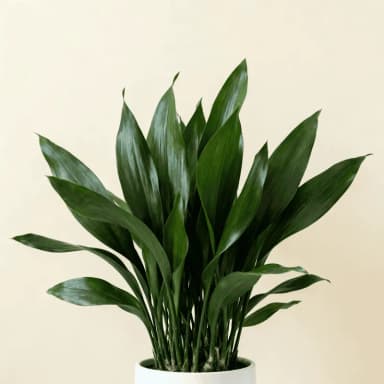
Aspidistra elatior
easy careThe plant earned its name in dim Victorian parlors for a reason: Aspidistra elatior tolerates deep shade, wide temperature swings, and long stretches of neglect better than almost anything else sold as a houseplant, growing so slowly that a missed watering rarely registers before the next one is due.
Quick care facts
- Watering
- Every 10–14 days, when the top half of the soil is dry; every 2–4 weeks in winter
- Light
- Low to bright indirect light; tolerates deep shade better than almost any common houseplant
- Humidity
- 30–50%; unbothered by dry indoor air
- Temperature
- 10–29°C (50–85°F); tolerates cooler rooms than most tropical houseplants
- Soil
- Standard well-draining potting mix
How to water a Cast-Iron Plant
Cast-iron plant doesn't hoard water in a swollen trunk or a rhizome the way some other tough houseplants do — its resilience comes from growing so slowly that it simply doesn't use much water to begin with. Check every 10 to 14 days and water once the top half of the soil has dried out; there's rarely any urgency either way.
Water thoroughly until it drains from the pot, then let the excess run off completely. The roots tolerate being slightly forgotten far better than being kept constantly wet, and because growth is so gradual, root rot can develop quietly for weeks before a single leaf shows a symptom.
In winter, stretch watering to every 2 to 4 weeks as the already-slow growth nearly stops. This is a patient plant to own — new leaves can take months to unfurl, so don't mistake a lack of visible change for a lack of health.
Watering a Cast-Iron Plant with LeafyPod
Because this plant's tough reputation leads owners to either ignore it or overcompensate with guilty extra watering, LeafyPod's real value is holding a conservative 10-to-14-day rhythm regardless of appearance — visible stress from either extreme shows up so late that reacting to it means the damage is already done.
The app treats this as one of its slowest-growing profiles and lengthens the interval further through winter, matching a plant whose water use barely changes month to month.

LeafyPod Starter Pack
From $145
Common Cast-Iron Plant problems
Signs of overwatering
- Soft, blackened leaf bases at the soil line
- Yellowing leaves that feel limp rather than crisp
- A musty or sour smell from consistently wet soil
- New leaves failing to emerge or rotting before unfurling
Signs of underwatering
- Leaf tips and edges turning brown and dry
- Leaves developing a dull, slightly folded look
- Very slow new growth, though this is also normal for the species
- Soil pulling away from the pot's edges
Frequently asked questions
How often should I water a cast-iron plant?
In winter, stretch the interval to every 2 to 4 weeks; the rest of the year, water every 10 to 14 days once the top half of the soil has dried out. This is one of the most forgiving common houseplants for missed waterings.
Can a cast-iron plant really survive in a dark room?
Yes — it tolerates deep shade better than almost any other houseplant sold, though growth slows even further and variegated types may lose some of their patterning. It simply won't grow quickly, not that it will struggle.
Why is my cast-iron plant growing so slowly?
Slow growth is completely normal for this species; new leaves can take months to unfurl even in ideal conditions. Don't read slow growth alone as a sign of a problem — check the soil and leaf firmness instead.
Why are my cast-iron plant's leaves turning yellow and soft?
Soft, yellowing leaves almost always mean the soil has stayed wet too long. Let it dry out fully, check that the pot drains freely, and hold off on watering again until the top half of the soil is dry.