Rubber Plant Care Guide
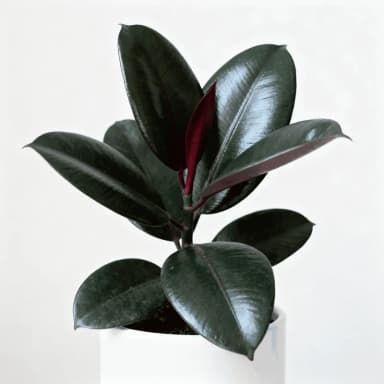
Ficus elastica
easy careRubber plant (Ficus elastica) is a sturdy, easygoing ficus whose thick, waxy leaves lose water slowly, so it wants the soil to dry out well between waterings — overwatering, not neglect, is what usually damages it.
Quick care facts
- Watering
- Every 1–2 weeks; water only once the top 5 cm (2 in) of soil is dry
- Light
- Bright, indirect light; tolerates some direct sun and medium light
- Humidity
- 40–50%; adapts to average household humidity
- Temperature
- 18–27°C (65–80°F); avoid below 12°C (54°F)
- Soil
- Well-draining potting mix with perlite or bark added
How to water a Rubber Plant
Rubber plant's thick, waxy leaves and sturdy stems hold water reserves that let it comfortably go a week or two between waterings. Check the top 5 centimetres of soil with a finger, and water only once that layer is fully dry — in most homes that lands every 7 to 14 days during the growing season.
Water deeply until it runs from the drainage holes, then let the pot drain fully rather than leaving it sitting in a saucer. A rubber plant's roots need a genuine dry stretch between waterings, and letting the pot sit in runoff undoes that dry-down within hours.
Stretch the interval to every 2 to 3 weeks in autumn and winter, when growth slows and the soil holds moisture longer. Wipe the large leaves occasionally with a damp cloth — dust buildup blocks light and can mask the early wilting that signals an overdue watering.
Watering a Rubber Plant with LeafyPod
LeafyPod's profile for rubber plant leans toward restraint: because this species tolerates a real dry-down so well, the app spaces out top-down waterings and skips a cycle when the reservoir and soil reading indicate the roots are still holding moisture, rather than watering on autopilot.
Delivering water from above and letting the pot drain fully protects rubber plant's thick roots from the constant dampness that a bottom-fill self-watering pot creates — the exact condition that causes most of the root and stem rot seen in this otherwise resilient ficus.

LeafyPod Starter Pack
From $145
Common Rubber Plant problems
Signs of overwatering
- Yellow leaves dropping from lower and upper growth alike
- Soft, dark patches on the stem near the soil
- Soil that remains visibly wet more than a week after watering
- A sour or musty smell from the pot
Signs of underwatering
- Leaves curling and drooping, recovering after a deep watering
- Dry, brittle brown edges on older leaves
- Slowed or stalled new leaf growth
- Lower leaves dropping while soil is bone-dry
Frequently asked questions
How often should I water a rubber plant?
Roughly every 1 to 2 weeks in spring and summer, and every 2 to 3 weeks in winter, always checking that the top 5 cm of soil is fully dry first. It tolerates a missed watering far better than consistently damp soil.
Why are my rubber plant's leaves falling off?
Leaf drop from both new and old growth, paired with soft stems, usually points to overwatering. Isolated lower-leaf drop with bone-dry soil instead suggests it has gone too long without water — let the soil guide which fix to try.
Does a rubber plant need high humidity?
No — it adapts well to normal household humidity between 40 and 50% and does not need misting or a humidifier to thrive, unlike many other tropical houseplants.
Can I keep a rubber plant in a self-watering pot?
Bottom-reservoir pots often keep the soil damper than this species prefers. A top-down system like LeafyPod, which lets the soil dry out between cycles, is a better match for its drought-tolerant nature.