African Violet Care Guide
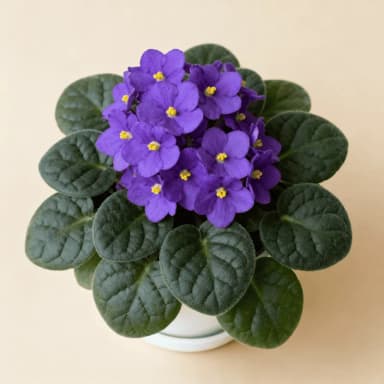
Saintpaulia ionantha
moderate careAfrican violets are famous for their fuzzy leaves, and just as famous for the ugly yellow-brown spots that appear the moment cold water touches them — which is why most growers water from below instead of over the top.
Quick care facts
- Watering
- Every 5–7 days, keeping soil lightly and evenly moist; bottom-watering is easiest
- Light
- Bright, indirect light; no direct sun, which scorches the fuzzy leaves — a north- or east-facing window works well
- Humidity
- 40–50%; average household humidity is fine
- Temperature
- 18–24°C (65–75°F); keep away from cold drafts and cold windowsills
- Soil
- Light, well-draining African violet mix (peat-based with perlite)
How to water an African Violet
Check the soil every 5 to 7 days and water as soon as the surface starts to feel dry — African violets want soil kept lightly and evenly moist, never left to dry out completely and never left soggy either.
Bottom-watering is the easiest way to get this right: set the pot in a shallow saucer of room-temperature water for 15 to 30 minutes, let the soil wick up what it needs, then remove it so the roots aren't left sitting in water.
If you water from the top instead, use only room-temperature or lukewarm water and pour it at the soil line, keeping it off the leaves — cold water shocks the leaf cells and leaves behind permanent yellow or brown ring-shaped spots that won't go away.
A self-watering pot with a wicking reservoir is a popular option for this species precisely because it keeps moisture constant without any risk of splashing the foliage.
Watering an African Violet with LeafyPod
LeafyPod delivers water at the soil line in small, frequent amounts that keep this plant's compact root ball evenly moist without ever touching the leaves — the same leaf-spotting risk that makes hand-watering finicky simply doesn't come up.
Because the reservoir uses room-temperature water rather than water straight from a cold tap, it also removes the temperature-shock spotting that catches a lot of African violet owners off guard.

LeafyPod Starter Pack
From $145
Common African Violet problems
Signs of overwatering
- Soft, mushy, or blackened stems at the base of the plant
- Lower leaves yellowing and feeling limp
- Dark, mushy roots when the plant is checked
- Fewer or no flowers despite otherwise healthy-looking foliage
Signs of underwatering
- Leaves wilting and looking deflated across the whole plant
- Crispy, brown, dry leaf edges
- Soil visibly pulling away from the sides of the pot
- Reduced or stalled flowering
Frequently asked questions
How often should I water an African violet?
Check the soil every 5 to 7 days and keep it lightly, evenly moist rather than letting it swing dry. Bottom-watering — setting the pot in a saucer of room-temperature water for 15 to 30 minutes — is the most reliable method.
Why do my African violet leaves have brown or yellow spots?
Ring-shaped spots almost always mean cold water touched the leaves. African violet leaves are sensitive to temperature shock, so always use room-temperature water and pour it at the soil line, not over the foliage.
Can I water African violets from the bottom?
Yes, and many growers prefer it. Set the pot in a shallow saucer of room-temperature water for 15 to 30 minutes so the soil wicks up moisture, then remove the pot so the roots don't sit in standing water.
Why won't my African violet bloom?
Inconsistent watering, too little light, or recent overwatering are the most common causes of stalled blooming. Keep the soil evenly moist rather than alternating between dry and soggy, and give it bright, indirect light.