Peace Lily Care Guide
Spathiphyllum wallisii
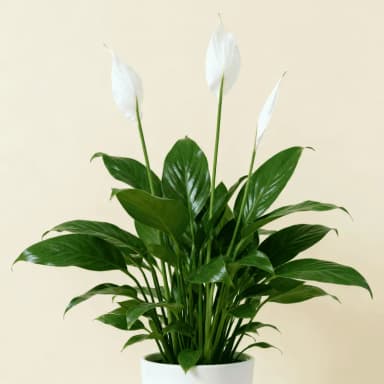
easy carePeace lily (Spathiphyllum wallisii) announces thirst louder than almost any houseplant — its leaves droop into a dramatic wilt within a day of drying out, then spring back firm within hours of a thorough watering.
Quick care facts
- Watering
- Every 5–7 days; keep soil consistently moist but never waterlogged
- Light
- Medium, indirect light; tolerates low light but blooms less
- Humidity
- 40–50%+; appreciates higher humidity
- Temperature
- 18–27°C (65–80°F); avoid cold drafts below 15°C (59°F)
- Soil
- Peat-based, well-draining potting mix that retains some moisture
How to water a Peace Lily
Peace lily wants soil that stays consistently moist, not wet — water whenever the top 2 to 3 centimetres of soil feel dry to the touch, which is typically every 5 to 7 days in the growing season. Unlike most houseplants, you rarely need to guess: its leaves droop dramatically within a day of the soil drying out, giving a clear visual cue that it's time to water.
Water thoroughly until it drains from the pot's holes, and empty any saucer within 30 minutes so the roots aren't left standing in water. A late watering rarely causes lasting damage since the plant recovers so fast, but soil that stays soggy for days will rot the roots.
Water slightly less often in winter, roughly every 10 days, since lower light and cooler temperatures slow how quickly the soil dries. Watch the leaves rather than the calendar: a plant that droops and then recovers fully after watering is telling you the interval you just used was close to right.
Watering a Peace Lily with LeafyPod
Peace lily's dramatic droop-and-recover cycle is a strong signal, but LeafyPod removes the need to watch for it: the app's profile keeps this species on a consistently moist schedule so the soil rarely dries out enough to trigger visible wilting in the first place.
Top-down watering combined with reservoir sensing keeps moisture steady without letting the roots sit in standing water — striking the balance this species needs between soil that never fully dries and soil that never stays soggy.

LeafyPod Starter Pack
From $145
Common Peace Lily problems
Signs of overwatering
- Yellowing leaves despite consistently wet soil
- Soft, blackened stems at the base
- Wilting even though the soil feels saturated
- Musty odor or fungus gnats around the pot
Signs of underwatering
- Leaves drooping dramatically and hanging limp
- Brown, crispy tips on leaf edges
- Soil pulling away from the sides of the pot
- Fewer or smaller new blooms
Frequently asked questions
Why is my peace lily drooping?
Drooping almost always means it needs water — this species wilts dramatically as soon as the soil dries out, then perks back up within a few hours of a thorough watering. If it stays droopy after watering, check for root rot from soil that never gets a chance to dry.
How often should I water a peace lily?
About every 5 to 7 days in the growing season and every 10 days in winter, whenever the top few centimetres of soil start to feel dry. Its drooping leaves will tell you if you've waited too long.
Can a peace lily recover from wilting?
Yes — a peace lily that has drooped from thirst typically stands back up within a few hours of a deep watering, with no lasting damage. Repeated severe wilting over time will eventually cause some leaf yellowing, though.
Does peace lily need high humidity?
It appreciates humidity above 40 to 50% and will develop crispier leaf tips in very dry air, but it does not require misting or a humidifier to survive in an average home.