Anthurium Care Guide
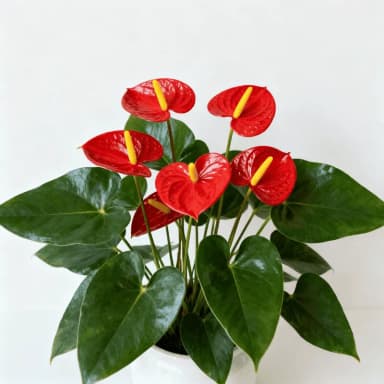
Anthurium andraeanum
moderate careAnthurium is an epiphyte in the wild, clinging to bark with roots built for airflow, so it needs a chunky mix and the top third of the pot to dry between waterings rather than the dense, damp soil most houseplants tolerate.
Quick care facts
- Watering
- Every 7–10 days; let the top third of the pot dry before watering again
- Light
- Bright, indirect light; avoid direct sun which scorches the waxy spathes
- Humidity
- 60–70%; use a humidifier or pebble tray for best blooming
- Temperature
- 18–27°C (65–80°F); avoid below 15°C (59°F)
- Soil
- Chunky, airy epiphyte mix (orchid bark, perlite, coco chips) — never dense potting soil
How to water an Anthurium
Anthurium's roots evolved to grip bark and breathe, not sit packed in dense soil, so this plant should live in a chunky orchid-style mix that drains and airs out fast. Water every 7 to 10 days, but the real test is depth: push a finger down and water again only once the top third of the pot has dried, not just the surface.
Water until it runs freely from the drainage holes, then let the pot drain completely — anthurium roots that sit in a soggy base rot within days because they aren't built to handle constant moisture the way soil-rooted plants are. A glossy, upright spathe is a good sign the balance is right.
Humidity affects this species as much as watering does: below 50%, anthurium leaves develop dry, crispy margins even on a correct watering schedule, so pair the dry-down routine with a humidifier or grouped plants nearby. Reduce watering slightly in winter as growth and light both slow.
Watering an Anthurium with LeafyPod
Because anthurium's epiphytic roots need airflow as much as moisture, LeafyPod's profile for this species is built around a shallower, more frequent top-down watering that wets the chunky bark mix without ever letting it turn dense and soggy the way a bottom-reservoir pot would.
The app tracks dry-down through the top third of the pot rather than treating the whole root zone as one moisture reading, matching how this species actually dries, and humidity alerts catch the crispy-edge stress that anthurium owners most often blame on watering instead of dry air.

LeafyPod Starter Pack
From $145
Common Anthurium problems
Signs of overwatering
- Soft, blackened roots visible at the pot's drainage holes
- Yellowing leaves with a mushy stem base
- Persistently soggy, dense-feeling mix that never airs out
- Fewer or smaller blooms despite otherwise healthy foliage
Signs of underwatering
- Dry, crispy leaf edges even with correct watering frequency
- Wilting or drooping spathes that don't firm up after watering
- Visibly shrunken, pulling-away root mass in a clear pot
Frequently asked questions
How often should I water an anthurium?
About every 7 to 10 days, but check depth rather than the calendar: water again once the top third of the pot has dried out. In winter, stretch the interval slightly as growth slows.
Can anthurium grow in regular potting soil?
Not well — its epiphytic roots need airflow, so dense potting soil holds too much moisture and causes root rot. Use a chunky orchid-style mix of bark, perlite, and coco chips instead.
Why are my anthurium's leaves crispy at the edges?
Crispy margins usually mean low humidity rather than underwatering, especially if the soil moisture is otherwise on schedule. Anthurium prefers 60–70% humidity, well above most homes' ambient level.
Why won't my anthurium bloom?
Inconsistent watering, low light, or dense soil that stays too wet all suppress blooming even when foliage looks healthy. Bright indirect light and a chunky, well-draining mix encourage new spathes.