Croton Care Guide
Codiaeum variegatum
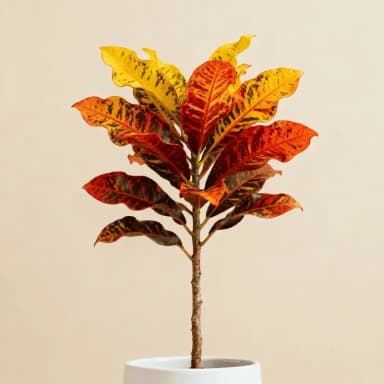
moderate careCroton (Codiaeum variegatum) is a thirsty, bright-light-loving shrub whose vivid leaf color depends on strong light — and it drops leaves fast in response to both a dry pot and the stress of being moved or relocated.
Quick care facts
- Watering
- Every 5–7 days, keeping soil evenly moist but well-drained
- Light
- Bright, direct-to-indirect light for several hours a day; color fades in low light
- Humidity
- 50%+ preferred; tolerates average household humidity with some leaf-edge crisping
- Temperature
- 18–27°C (65–80°F); avoid drafts and sudden temperature swings
- Soil
- Rich, well-draining potting mix
How to water a Croton
Croton is one of the thirstier common houseplants — check every 5 to 7 days and water as soon as the top 2 to 3 centimetres of soil feel dry, since letting the whole pot dry out triggers rapid leaf drop. Unlike drought-tolerant aroids, croton doesn't have much of a buffer once the soil goes fully dry.
Water thoroughly until it runs from the drainage holes, then let the excess drain away completely; croton wants soil kept evenly moist, not soggy, so good drainage still matters even with the shorter interval. A rich but well-draining mix supports both the frequent watering and the plant's fast growth in bright light.
Croton is also notably sensitive to being moved: a sudden change in light, temperature, or location — including bringing a new plant home — often causes leaf drop within days, independent of watering. Give a newly placed croton a few weeks in a stable spot before troubleshooting the schedule.
Watering a Croton with LeafyPod
Because croton has little tolerance for a full dry-out, LeafyPod keeps this species on a shorter, more frequent top-down cycle than drought-tolerant plants get, closing the gap before the soil fully dries and the leaf drop that follows sets in.
The app's consistent, scheduled delivery also removes one variable from a plant that already drops leaves over environmental stress — with watering handled automatically, the main thing left to keep stable for a croton is its spot in the room.

LeafyPod Starter Pack
From $145
Common Croton problems
Signs of overwatering
- Lower leaves yellowing and dropping while feeling soft
- Soil staying wet and smelling sour days after watering
- Root rot with dark, mushy roots when checked
- Wilting despite consistently damp soil
Signs of underwatering
- Rapid leaf drop, often starting with older leaves
- Leaves curling and losing their bright coloring
- Crispy, browning leaf edges and tips
- Soil pulling away from the sides of the pot
Frequently asked questions
How often should I water a croton?
Every 5 to 7 days, as soon as the top 2 to 3 cm of soil feels dry — croton is thirstier than most common houseplants and doesn't tolerate a full dry-out well before dropping leaves.
Why is my croton dropping leaves?
Leaf drop usually means either the soil dried out too much or the plant was recently moved to a new light or temperature. Check the soil first, and if it's damp, give the plant a few weeks to settle before changing anything else.
Why did my croton lose its bright color?
Croton needs several hours of bright, direct-to-indirect light a day to hold its red, orange, and yellow variegation; in low light, new leaves grow in mostly green. Moving it closer to a bright window usually restores color in new growth.
Can I move my croton to a new spot without stressing it?
Sudden changes in light or temperature are the most common trigger for croton leaf drop, so introduce any move gradually — a few hours a day in the new spot for a week or two — rather than relocating it all at once.