Prayer Plant Care Guide
Maranta leuconeura
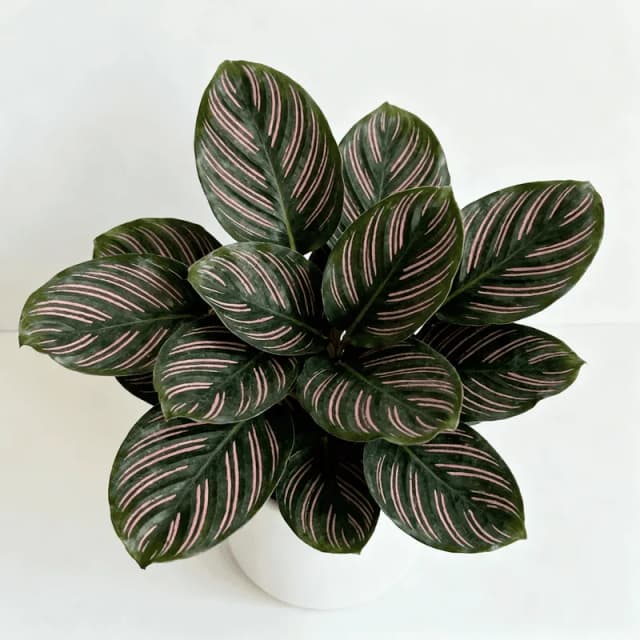
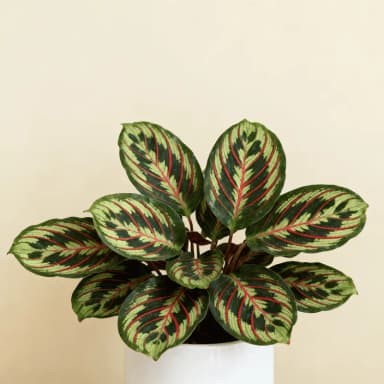
advanced careMaranta leuconeura folds its patterned leaves up like praying hands every night, a normal rhythm called nyctinasty, but this advanced-care plant is far less forgiving about consistent moisture, clean water, and high humidity than its reputation as merely a 'fussy' houseplant suggests.
Quick care facts
- Watering
- Every 5–7 days, keeping soil consistently moist — never fully dry and never soggy
- Light
- Medium to bright indirect light; no direct sun, which fades and scorches the leaf pattern
- Humidity
- 60%+ required; use a humidifier, pebble tray, or grouped plants to sustain it
- Temperature
- 18–24°C (65–75°F); avoid cold drafts and sudden temperature drops
- Soil
- Peat-based, moisture-retentive but well-draining potting mix
How to water a Prayer Plant
Check every 5 to 7 days and water as soon as the top of the soil starts to feel dry — a prayer plant wants soil kept consistently moist throughout, since it has little tolerance for either drying out fully or sitting waterlogged.
Maranta's fine, thin roots don't buffer against whatever's dissolved in the water, so tap water's chlorine, fluoride, and mineral salts build up in the soil faster here and surface as brown, crispy tip burn. Reach for rainwater or filtered water first, and flush the pot occasionally with a heavy plain-water soak to carry accumulated salts out the drainage holes.
Humidity matters as much as the watering schedule — aim for 60% or higher with a humidifier or pebble tray, since dry air causes curling and crisping edges no matter how well the soil is watered. The nightly leaf-folding itself is a normal daily rhythm, not a distress signal; leaves that stay curled or drooping during the day, on the other hand, usually mean the plant is thirsty.
Watering a Prayer Plant with LeafyPod
A prayer plant's leaves already give a daily readout of how it's doing — folding up each night on schedule and lying flat each morning when moisture is right, but staying curled through the day the moment the soil runs too dry.
LeafyPod's small, steady deliveries keep that fold-and-open rhythm on schedule, so a curled leaf reads as ordinary nyctinasty rather than stress; humidity and water quality still fall to the grower, since the app only manages soil.

LeafyPod Starter Pack
From $145
Common Prayer Plant problems
Signs of overwatering
- Soft, mushy stems near the soil line
- Dark, mushy roots when the plant is checked
- Yellowing lower leaves that feel limp
- Moldy smell from consistently soggy soil
Signs of underwatering
- Leaves curling tightly and staying folded during the day
- Crispy, brown leaf tips and edges
- Dull, faded leaf color and slowed growth
- Soil pulling away from the sides of the pot
Frequently asked questions
How often should I water a prayer plant?
Check the top of the soil, and water as soon as it starts to feel dry — usually every 5 to 7 days. Keep the soil consistently moist rather than letting it dry out fully between waterings.
Why does my prayer plant fold its leaves up at night?
That nightly folding, called nyctinasty, is completely normal and gives the plant its name. It happens in response to changing light and isn't a sign of stress by itself.
Why are my prayer plant's leaf tips turning brown?
Brown, crispy tips usually point to tap water sensitivity or low humidity. Switch to filtered or rested water and raise humidity around the plant to at least 60%.
What kind of water should I use for a prayer plant?
Filtered, distilled, or rainwater is best. Tap water's chlorine, fluoride, and mineral salts build up in the soil and cause leaf-tip burn in this species more than in most houseplants.
Why is my prayer plant curling its leaves during the day?
Unlike the normal nightly fold, leaves that stay curled or drooping during daylight hours usually mean the plant is thirsty. Check the soil and water if it has started to dry out.