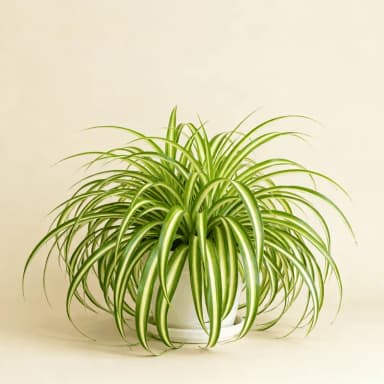
Spider Plant Care Guide
Chlorophytum comosum
easy careSpider Plant (Chlorophytum comosum) is one of the most forgiving houseplants around, tolerant of missed waterings and low light — its main quirk is that fluoride and chlorine in tap water scorch its leaf tips, not the watering schedule itself.
Quick care facts
- Watering
- Every 7–10 days, when the top 2–3 cm (1 in) of soil has dried out
- Light
- Bright, indirect light; tolerates low-to-medium light without complaint
- Humidity
- Average household humidity (40%+) is fine; no supplemental humidity needed
- Temperature
- 13–27°C (55–80°F); keep away from cold drafts below 10°C (50°F)
- Soil
- Standard well-draining potting mix
How to water a Spider Plant
Spider plants are among the most forgiving houseplants to water: check every 7 to 10 days and water once the top 2 to 3 centimetres of soil are dry. The thick, water-storing roots buffer a missed week without lasting damage, unlike a thirstier species.
The one quirk that trips up new owners is water quality, not frequency: spider plants are notably sensitive to the fluoride and chlorine in tap water, which shows up as brown, dead tips even when the watering schedule is spot on. Switching to filtered or distilled water, or letting tap water sit out uncovered for 24 hours before use, clears up most tip browning within a few new leaves.
Ease off slightly through winter as growth slows and the soil takes longer to dry between waterings — check the same way, by feel, rather than watering on a fixed calendar. Spider plants also send out long stems of baby plantlets ('pups') that don't need separate watering; keep treating the whole pot as one plant.
Watering a Spider Plant with LeafyPod
LeafyPod's top-down reservoir uses filtered water by design, which removes the fluoride and chlorine exposure that causes the brown-tip scorching spider plants are known for — a common complaint that has nothing to do with how often the plant is watered.
Because spider plants tolerate a wide moisture range, the app's schedule stays conservative and simply confirms the soil has dried before the next cycle, so a forgiving plant stays forgiving instead of getting overwatered by a fixed-interval system.

LeafyPod Starter Pack
From $145
Common Spider Plant problems
Signs of overwatering
- Yellowing, limp leaves at the base of the plant
- Mushy, blackened roots or a sour smell from the soil
- Rotting pups or stems at the base of the plant
- Soil that stays soggy for more than a week
Signs of underwatering
- Thin, curling leaves that feel dry and papery
- Brown tips combined with dry, pulling-away soil
- Slowed or stopped production of new pups
- Overall wilting that perks back up quickly after watering
Frequently asked questions
How often should I water a spider plant?
Every 7 to 10 days in spring and summer, whenever the top 2 to 3 cm of soil has dried out, stretching a little longer in winter. Spider plants tolerate an occasional missed watering better than most houseplants.
Why are my spider plant's leaf tips turning brown?
Brown tips are almost always a reaction to fluoride or chlorine in tap water rather than a watering mistake. Switch to filtered or distilled water, or let tap water sit out uncovered for a day before using it, and new growth should come in clean.
Can spider plants survive in low light?
Yes — spider plants tolerate low-to-medium light well, though variegation is more vivid and growth is faster in bright, indirect light. Very dark corners will just slow growth rather than harm the plant outright.
Do I need to water spider plant babies separately?
No. The plantlets ('pups') that form on long stems draw water and nutrients through the parent plant, so watering the main pot on its normal schedule is enough until you cut a pup off to root it separately.